
How to Protect Your Genesis Interiors from Central Florida Heat and Humidity
There is a distinct price to pay for Central Florida's beautiful climate. While we enjoy warm afternoons near Lake Minneola and scenic drives through the rolling hills of Clermont, our vehicles are constantly battling an invisible enemy: extreme, unrelenting atmospheric humidity.
During a typical Central Florida summer,
relative humidity routinely surges past 85%, accompanied by intense, sudden
afternoon downpours. While your vehicle's exterior paint and mechanical
components absorb the heat, your cabin's delicate soft-touch materials, such as
supple Nappa leather, Alcantara headliners, and complex digital displays, are
under continuous stress.
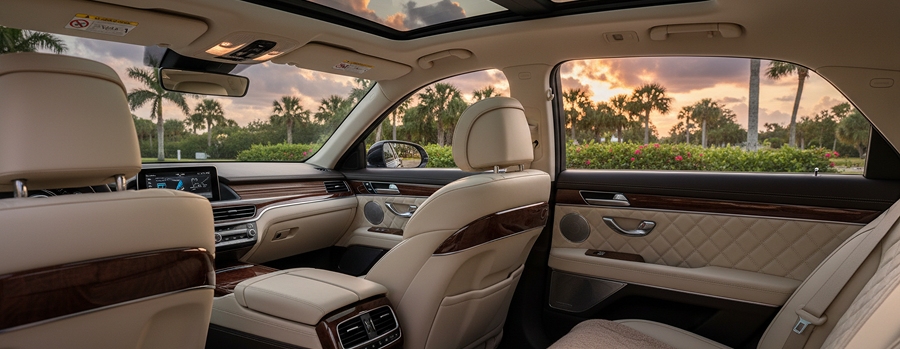
Unchecked moisture trapped inside a luxury
cabin can quickly lead to fogged windshields, degraded door seals, and
destructive mold growth.
This technical guide outlines essential steps
for preventing mold and mildew in luxury leather interiors, maintaining
clear visibility, and protecting your investment against Central Florida’s
summer climate.
1. Defending Premium Leather Upholstery Against Moisture & Mildew
Luxury vehicle interiors utilize organic,
fine-grain leathers that feature open micro-pores. Unlike synthetic vinyl seats
found in economy cars, high-grade leather dynamically breathes—meaning it
absorbs ambient moisture directly from the air.
When high humidity mixes with body oils, skin
dander, and trapped cabin heat, it creates the ideal breeding ground for
microscopic fungal spores.
OEM
Leather Preservation vs. Generic DIY Cleaners
|
Care Aspect
|
Certified Luxury Care
|
Generic DIY Cleaners
|
|
Cleaning Agent
|
pH-balanced micro-cleaners that lift
trapped dirt
|
Harsh detergents or household soaps
|
|
Finish Quality
|
Restores natural matte factory
appearance
|
Leaves a greasy, sticky shine that
attracts dust
|
|
Moisture Barrier
|
Breathable ceramic or fluoropolymer
UV shields
|
Heavy silicone oils that clog pores
and trap moisture
|
Essential Leather Protection Steps:
-
Deep Clean the Micro-Pores: Before applying any conditioning agents, use a gentle, pH-balanced
leather cleaner to remove organic oils, skin dander, and microscopic dust.
Trapped dirt acts as the primary food source for mildew.
-
Apply Breathable UV & Moisture Conditioners: Avoid heavy, petroleum-based
oily dressings. Choose specialized, breathable ceramic or fluoropolymer leather
preservers that seal out liquid spills while allowing the leather to naturally
release trapped humidity.
-
Manage Interior Micro-Climates: If you park outdoors in Clermont during peak
summer, leave your climate control on "Auto" to allow the vehicle's
automated dehumidification cycles to run efficiently during remote engine start
sessions.
Few things are more frustrating during an
early morning commute down the Turnpike than starting your vehicle only to have
the interior glass immediately fog over with a thick layer of condensation.
This occurs because cold air from your air
conditioner chills the glass, causing the moisture in the warm, humid air
inside the cabin to condense instantly on the inner surface.
Cabin
Dehumidification Action Plan
|
Step
|
Recommended Action
|
Operational Purpose
|
|
Step 1
|
Engage A/C Compressor
|
Acts as the primary active cabin
dehumidifier
|
|
Step 2
|
Select Fresh Air Mode
|
Forces humid interior air out
through rear ventilation ports
|
|
Step 3
|
Clean Interior Glass
|
Removes off-gassing film so moisture
cannot cling
|
|
Step 4
|
Inspect Cabin Filter
|
Ensures unrestricted airflow across
the HVAC evaporator
|
To execute a lasting Florida humidity car windows fogging fix, follow these operational adjustments:
-
Keep Your A/C Compressor Engaged: Never turn off the A/C button, even if you
are raising the interior temperature for comfort. The A/C compressor acts as
the vehicle’s primary dehumidifier, pulling gallons of water out of the cabin
air every week.
-
Switch from Recirculation to Fresh Air: While recirculated air keeps the cabin cool
initially, holding it on continuously traps human breath and ambient moisture
inside.
-
Clean the Interior Glass Film: A thin, microscopic layer of off-gassing
vinyl film builds up on interior windshields over time. Wiping the inner glass
with a streak-free, ammonia-free cleaner removes the anchor points condensation
needs to form.
A panoramic glass sunroof adds incredible
light and spaciousness to a luxury cabin, but it also introduces a significant
water management challenge during Central Florida's storm season.
Contrary to popular belief, the rubber
weather seals around a panoramic sunroof are not designed to be 100%
waterproof. Instead, automotive engineers build specialized internal drainage
channels underneath the glass perimeter to catch water that seeps through,
directing it down through plastic drain tubes located inside the vehicle's roof
pillars.
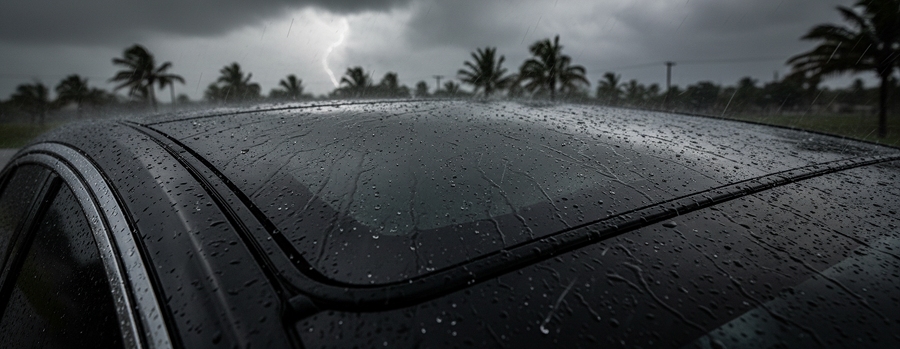
Over time, pine needles, oak pollen, and dirt
washed off the roof during afternoon downpours settle into these small drain
channels, creating dense clogs.
|
Component
|
Function
|
Potential
Failure Point
|
|
Glass
Perimeter Seal
|
deflects
heavy rain impact
|
Normal
micro-gaps allow small amounts of water past
|
|
Internal
Catch Channels
|
Collects
water seeping past seals
|
Clogged by
pine needles, dirt, and tree pollen
|
|
Pillar
Drain Tubes
|
Routes
water out beneath chassis
|
Trapped
water backs up and overflows into headliner
|
Panoramic Sunroof Drainage System Flow
When a blockage occurs, rainwater backs up in
the channel and overflows directly into your vehicle’s headliner. This leads to
soggy carpets, foul odors, and expensive damage to sensitive electronic control
modules beneath the floorboards.
Scheduling routine panoramic sunroof drain
line clearing in Clermont ensures that service technicians can clear these
hidden channels using low-pressure air flushes and specialized line snakes.
This keeps rainwater flowing safely down to the pavement, protecting your cabin
from hidden leaks during storm season.
4. Restoring Barrier Integrity: Weather Strip Seal Restoration for
Luxury Cars
Your vehicle’s rubber door and trunk seals
serve as the primary barrier against noise, heat, and moisture. However,
intense Central Florida sunshine and extreme temperatures quickly degrade
untreated rubber.
Over time, rubber weatherstripping loses its
elasticity, drying out, cracking, and shrinking. This compromises the airtight
seal around your doors, allowing humid air and moisture to seep into the cabin
overnight.
Effective weather strip seal restoration
for luxury cars requires a proactive approach:
-
Clean Away Grime & Mold: Wipe down all door, trunk, and sunroof
rubber seals using a damp microfiber cloth and mild soapy water to remove
abrasive road grit.
-
Rejuvenate with Pure Silicone Conditioners: Apply a specialized, solvent-free silicone
rubber nourishment compound (such as dielectric silicone gel or specialized
Swiss-formulated rubber dressings) to all weatherstripping every six months.
-
Maintain Structural Flexibility: Proper conditioning keeps rubber soft,
pliable, and expanded, ensuring a tight seal against rain, heat, and road
noise.
Experience Certified Interior Care in Lake County
Protecting a luxury automobile against
Central Florida's climate requires more than a simple drive-through car wash.
From clearing hidden body drain channels to applying specialized cabin
conditioners, staying proactive preserves your vehicle's interior condition and
long-term resale value.
At Genesis of Central Florida, our
factory-trained technicians understand the unique environmental challenges
faced by drivers in Clermont, Minneola, and West Orlando. Whether you need a
seasonal multi-point inspection, HVAC sanitization, or panoramic sunroof
maintenance, our service team provides uncompromising care.
Take advantage of our premium Genesis Service Valet program to have your vehicle picked up directly from your home or office. Contact our service department or book your appointment online today!
