
How to Extend the Life of Your Genesis Tires: 7 Essential Tire Care Tips
Your Genesis is designed to deliver a refined driving experience, but even advanced suspension and handling systems ultimately depend on something relatively simple: properly maintained tires.
Your tires are the only part of your
Genesis that directly contacts the road. Their condition can affect handling,
braking, ride comfort, road noise and overall driving confidence.

For drivers in Central Florida, tire
maintenance can be especially important. Hot temperatures, intense sunlight,
heavy rain and frequent highway driving can all contribute to tire wear over
time.
The good news is that many tire problems
can be identified before they become major issues. Here are seven ways to help
maintain your Genesis tires and get the most from them.
1. Check Your Genesis Tire Pressure Regularly
Proper inflation is one of the simplest
ways to take care of your tires.
Driving with underinflated tires can
increase rolling resistance and cause additional wear along the edges of the
tread. Overinflation can contribute to a harsher ride and may reduce the tire's
contact with the road.
Check your tire pressure at least once a month and before longer road trips. It's best to check
the pressure when the tires are cold, before you've
driven far enough for them to heat up.
Use the recommended PSI listed on the
driver's-side door-jamb label or in your Genesis owner's information. Don't use
the maximum pressure printed on the tire sidewall as a substitute for your
vehicle's recommended pressure.
Your Genesis' Tire Pressure Monitoring
System can also alert you when tire pressure is significantly low, but it
shouldn't replace regular pressure checks.
2. Inspect Your Tires for Damage
A quick visual inspection can help you
spot tire problems before they become more serious.
Look around each tire for:
·
Cracks or cuts in the
sidewall
·
Bulges or blisters
·
Punctures or embedded
objects
·
Unusual wear patterns
·
Damage to the tread or
sidewall
Central Florida's roads can expose tires
to everything from potholes and road debris to extremely hot pavement. An
impact that seems minor can sometimes cause internal tire damage that isn't
immediately obvious.
If you notice a bulge, significant cut or
other serious damage, don't continue driving on the tire without having it
professionally inspected.
3. Watch for Uneven Tread Wear
Your tires don't always wear evenly, and
the pattern can sometimes tell you something about your Genesis.
Excessive wear along one edge may
indicate an alignment or suspension issue. Wear concentrated in the center of
the tread can be associated with overinflation, while excessive wear along both
edges can occur when a tire is underinflated.
Uneven wear can also develop when tires
aren't rotated according to the vehicle's recommended maintenance schedule.
If one or more tires appear noticeably
different from the others, have them inspected rather than simply replacing the
most worn tire. The underlying cause may need to be addressed to prevent the
problem from returning.
4. Rotate Your Tires According to Your Genesis Maintenance
Schedule
Tire rotation can help promote even wear
across the tires.
However, there isn't one universal
rotation interval that applies to every Genesis. The appropriate schedule can
depend on the model, drivetrain, tire configuration, and other factors.
Follow the maintenance recommendations
specific to your Genesis.
Regular rotation can be particularly
useful when the front and rear tires experience different amounts of wear.
Keeping tread wear more consistent can help maintain balanced handling and
allow you to get more useful life from the set.
If your Genesis is equipped with a
performance-oriented tire setup or different-size front and rear tires, the
rotation options may also be limited. In those cases, follow the tire and
vehicle manufacturer's recommendations rather than assuming a standard rotation
pattern applies.
5. Know When Your Genesis Needs a Wheel Alignment
Proper alignment helps your Genesis track
straight and allows the tires to meet the road as intended.
An alignment inspection may be appropriate if you notice:
·
Your Genesis pulling to
one side
·
An off-center steering
wheel while driving straight
·
Uneven or accelerated
tire wear
·
Changes in handling
·
Steering that doesn't
feel as precise as it normally does
Hitting a pothole, curb or other
significant road obstacle can also affect wheel alignment.
You don't necessarily need a wheel
alignment simply because a certain amount of time has passed. If your Genesis
is handling normally and the tires are wearing evenly, follow your vehicle's
maintenance recommendations. If you notice symptoms, however, having the
alignment checked can help identify the cause.
6. Don't Ignore Vibrations or Changes in Ride Quality
A Genesis is engineered to provide a
smooth and controlled ride. That's why a new vibration or change in ride
quality is worth paying attention to.
A vibration through the steering wheel or
vehicle can have several possible causes, including:
·
Tire imbalance
·
Uneven tire wear
·
A damaged tire or wheel
·
Wheel alignment issues
·
Suspension problems
The speed at which the vibration occurs
and where you feel it can provide useful clues, but diagnosing the cause
requires a proper inspection.
If your Genesis suddenly feels different
on the road, don't simply assume it's normal tire
wear. Having the tires, wheels and related components inspected can help
determine what's actually causing the change.
7. Keep an Eye on Tread Depth and Tire Age
Tread depth is an important indicator of
remaining tire life.
Your tires have built-in tread-wear
indicators located in the grooves of the tread. When the tread wears down to
the level of these indicators, the tire has reached the manufacturer's wear
limit and should be replaced.
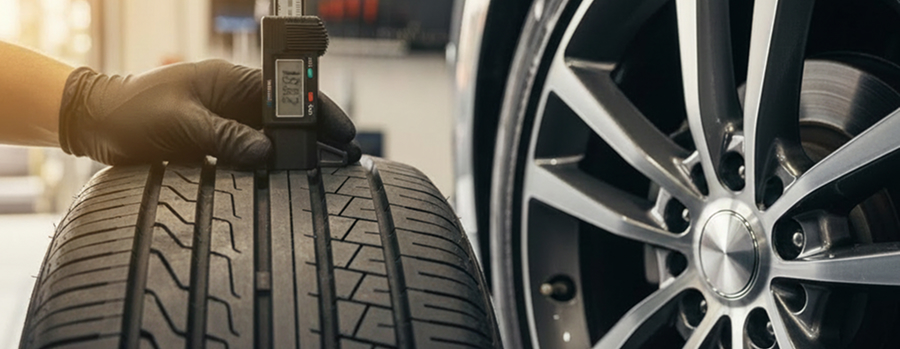
For a more precise measurement before
reaching that point, a tread-depth gauge can provide an actual measurement
rather than relying on a visual estimate.
Age matters, too. Tires can deteriorate
over time even when they haven't accumulated a high number of miles. Heat and
prolonged exposure to sunlight can contribute to rubber degradation, which
makes tire condition particularly worth monitoring in Florida.
If you're unsure how old your tires are,
check their date information or have a technician inspect them.
When
Should You Have Your Genesis Tires Inspected?
You don't have to wait until the tire
goes flat to have it checked.
Consider scheduling a professional tire
inspection if you notice:
·
Frequent loss of tire
pressure
·
Uneven tread wear
·
Steering-wheel vibration
·
Your Genesis pulling to
one side
·
Visible tire damage
·
Reduced tread depth
·
Changes in handling or
ride quality
A professional inspection can also make
sense before a long road trip. Spending a few minutes checking tire condition
can help you identify potential problems before you're hundreds of miles from
home.
Keep
Your Genesis Performing at Its Best
Tire care is about more than getting the
maximum number of miles out of a set of tires. Properly maintained tires help
support the handling, ride quality, braking performance and refinement you
expect from a Genesis.
For drivers in Central Florida, regular
tire inspections are especially worthwhile given the combination of high
temperatures, intense sunlight, heavy rain and year-round driving.
If your Genesis needs a tire inspection,
rotation, balancing, alignment or other maintenance, the service team at Genesis
of Central Florida can help evaluate the condition of your vehicle and
recommend the appropriate service.
Whether you're preparing for a road trip or simply want to make sure your tires are ready for another season of Central Florida driving, scheduling a professional inspection can be a simple step toward keeping your Genesis performing the way it was designed.
